Table of Contents
Water, electricity, gas. These used to be the only things people called utilities. Now there’s another one. Internet connectivity has pushed its way onto that short list of stuff we can’t live without. Nobody voted on this change. It just happened while we were busy living our lives.
The New Definition of Essential Services
Lose your internet connection in 2005? Annoying, sure. Lose it today? Your kid misses school. You can’t work. Grandma’s heart monitor is no longer alerting her doctor. The pharmacy is unable to fill prescriptions. Even your doorbell goes dumb.
How did we get here so fast? Well, it wasn’t actually that fast. Every year, a few more gadgets needed Wi-Fi. First the phone. Then the TV. The thermostat wanted in on the action. So did the coffee maker, for some reason. Before anyone noticed, half the house refused to work without a network connection.
Then 2020 hit like a brick. Suddenly everyone worked from kitchen tables. Kids went to school on laptops. Grandparents learned what Zoom meant. Lots of people still worked remotely. Even after all the offices opened back up. Students are still turning in homework online. Telehealth appointments stuck around too. There’s no putting this genie back in the bottle.
How Cities Run on Networks Now
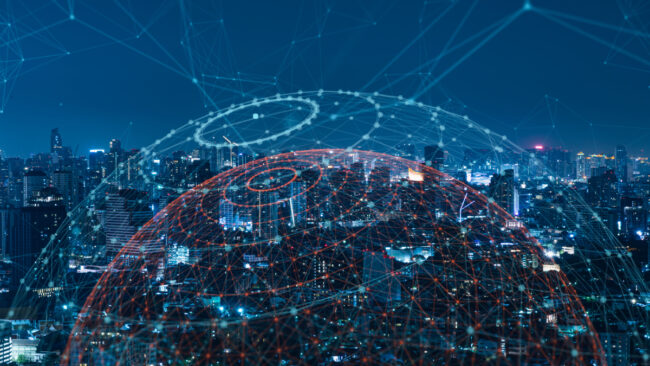
Walk around any city today. See those traffic lights? They’re chatting with each other, figuring out the best flow patterns. That parking meter knows exactly how many spots are open three blocks away. The bus stop sign shows real arrival times, not some fantasy schedule. Street lamps brighten when you walk by, then dim to save power. Sewers send alerts before they flood. Bridges report their own structural problems.
This stuff sounds like science fiction, but it’s just Tuesday in most American cities now. Urban infrastructure connectivity keeps the whole show running, with companies like Blues IoT building wireless systems that connect sensors in everything from water mains to electrical grids. Take away these connections and cities would stumble around like someone feeling for a light switch in the dark.
The Human Cost of the Digital Divide
Here’s the ugly truth though. Millions of Americans still can’t get decent internet. Rural towns might have one terrible option or none at all. Poor urban neighborhoods face slow, costly, unreliable internet. It’s like living in two centuries simultaneously.
Think about what this means for a kid trying to do homework. Their classmates stream educational videos without thinking twice. Meanwhile, this kid sits in a McDonald’s parking lot stealing Wi-Fi to submit assignments. They fall further behind every semester. Their parents can’t help because the school puts everything online now. Parent portals, homework help, teacher conferences. All digital. All out of reach.
Adults struggle too. Good luck applying for jobs on paper applications nobody accepts anymore. Want to learn new skills? Those training programs live online. Need to see a doctor? Better hope you can get to the clinic in person, because telehealth requires broadband. The disconnected get locked out of modern life while everyone else zooms ahead.
Business Without Borders or Limits

Connectivity completely scrambled the old rules of business. A tiny bakery in rural Kansas sells cookies to customers in Tokyo. Plumbers schedule appointments while sitting in their trucks. Farmers check soil moisture from bed. Restaurants survive on delivery apps and online ordering.
Remember when people had to live near their jobs? That’s over for millions of workers. A programmer in Montana writes code for a startup in Miami. An accountant in Vermont handles books for clients in California. Companies hire talent regardless of location. Remote workers seek affordable housing and good internet in former factory towns.
This reshapes entire economies. House hunters pay more for properties with fiber optic connections than identical homes with DSL. New businesses skip towns without solid broadband. Economic development agencies talk about gigabit speeds the way they used to brag about highway access. Places with bad internet watch residents and opportunities disappear.
Modern business would collapse without connectivity anyway. Factories track supply shipments crossing oceans. Stores know their inventory down to the last package of gum. Credit card payments process instantly. Delivery drivers follow routing algorithms updated every few seconds. Cut off these networks and capitalism will stop within hours.
Security Challenges in a Connected World
Full connectivity leads to complications. Every smart device is basically a tiny door that hackers might pick open. Connected hospitals, power plants, and water treatment facilities make tempting targets. Your smart fridge could theoretically help take down the power grid. Sounds ridiculous until it happens.
The threats are real and getting worse. Criminals lock up city computers and demand ransom. Foreign governments probe infrastructure for weak spots. Teenagers cause chaos just for laughs. A single attack could cut power and water for millions. Experts lose sleep over plausible disaster movie-like threats.
Fighting back demands major resources. Systems need constant updates and monitoring. Backup plans must exist for when networks fail. Workers need training to recognize attacks. The price tag for protection keeps climbing, but what choice do we have? Disconnecting isn’t an option anymore.
Conclusion
Connectivity snuck onto the list of critical utilities while nobody was paying attention. One day it was a luxury. The next day, losing internet felt like losing electricity. Cities can’t manage traffic or water systems without networks. Businesses can’t process sales or track inventory. Kids can’t attend school. Patients can’t see doctors. The transformation is complete and irreversible.
Nevertheless, we are facing an issue. Many Americans still lack good, affordable internet. They’re getting left behind more each day. As the gap widens between the connected and disconnected, we’re creating two separate societies. One races ahead into the future. The other is caught in the past. It’s unsustainable and unfair.
It has become clear that connectivity is an essential utility, like water and power. That debate ended already. The question is what we do about it. How do we get everyone connected? Who pays? How fast do we need to move? These answers will determine whether technology brings us together or tears us apart. Time to choose.